10 Simple Ways to Add More Creativity to Your Daily Routine
June 24, 2026
10 Easy Home Styling Tips to Make Any Room Look Expensive
June 24, 2026
Your living space has a profound impact on your imagination, productivity, and overall well-being. Here’s how to transform your home into a creativity powerhouse.
The Creative Home: More Than Just Decor
The spaces we inhabit shape our thoughts, emotions, and ideas more than we often realize. Our environment can drive creativity—or it can stifle it. As we spend more time at home than ever before, the connection between our living spaces and our creative output has never been more important.
Designing a home that inspires creativity isn’t about following rigid rules or chasing the latest trends. It’s about creating an environment that stimulates your senses, supports your passions, and gives you permission to think differently. As interior designer Justina Blakeney puts it: “Most people decorate for style, or for what looks ‘right,’ but joy is different. You can feel joy in the body as tingles, or a floaty feeling, or as laughter”.
Whether you’re an artist, writer, entrepreneur, or simply someone who wants to bring more imagination into daily life, these principles will help you design a home that truly inspires.
1. Start with Color Psychology
Color is one of the most powerful tools for influencing mood and creativity. The right palette can energize your mind, calm your nerves, or strike the perfect balance between stimulation and tranquility.
Colors That Spark Creativity
- Yellow and Orange – Evoke enthusiasm, positivity, and liveliness
- Green – Linked to enhanced creative thinking; an excellent choice for studios, writing nooks, and home offices
- Blue – Optically recessive, making spaces feel larger. Research shows people exposed to blue score higher on creative-thinking exercises
- Warm neutrals and jewel tones – Create depth and richness while maintaining a grounded, lived-in feel
The “Just-Give-It-a-Go” Attitude
Don’t be afraid to take risks with color. Spaces like powder rooms, hallways, and utility rooms are perfect spots to experiment with daring wallpapers and bold colors. As interior designer Alyssa Owens explains: “When we design only for ourselves, we give ourselves permission to be braver and that often leads to the most interesting work”.
2. Embrace Openness and Intentional Layout
The way you arrange your space directly affects how your mind works.
Open Spaces for Open Minds
Our minds tend toward creative thinking when our surroundings feel open and expansive. Studies show that working in a room with a high ceiling can make us more receptive to new ideas. Conversely, constricted spaces activate our analytical, detail-oriented side.
Face Into the Room
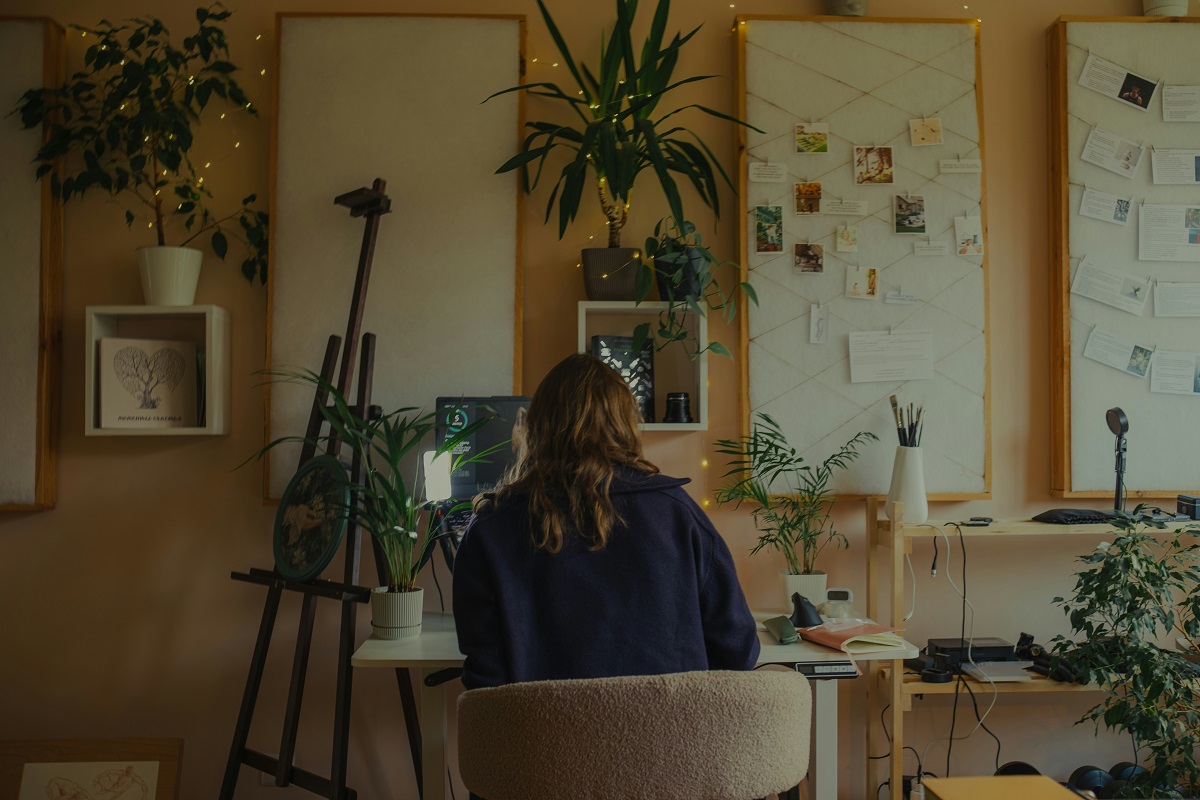
Where you position your desk matters. Facing a wall constricts your sense of space and may even make you feel anxious. Instead, face into the room with a wall or solid element behind you. This orientation facilitates a positive mindset conducive to creativity.
Create Distinct Zones
Designate specific areas for different activities—a writing nook, an art corner, a reading retreat. We associate different spaces with different activities, and designing zones that suit your creative needs can significantly boost productivity.
3. Master the Art of Lighting
Lighting is critical for fostering creativity. The right light can uplift your mood, increase energy, and make you happier.
Prioritize Natural Light
Daylight boosts productivity and helps you focus. Natural light is known to enhance mood and productivity, so keep windows unobstructed whenever possible. If you have the opportunity, consider adding roof windows—not only for the daylight but also for the inspiration of watching the sun, clouds, and stars above.
Layer Your Lighting
Good lighting design goes beyond a single overhead fixture. A layered approach combines:
- Ambient lighting – Overall illumination for safe movement
- Task lighting – Focused light for specific activities
- Accent lighting – Sculptural or decorative fixtures that add visual interest
Oversized pendants, curvy lamps on dimmers, and wall sconces add height, softness, and movement to a space. Rechargeable wall lighting offers flexibility without the constraint of cords.
4. Bring Nature Inside
Human beings evolved in natural environments, and we thrive when connected to nature. When we’re deprived of natural stimuli, we’re less creative, happy, and healthy.
Biophilic Design Principles
- Indoor plants – Bring color, texture, and life to your environment while purifying the air and promoting calm
- Natural materials – Wood, stone, bamboo, rattan, and organic cotton add depth and maintain a connection to nature
- Natural sounds – Even incorporating running water or hanging a landscape painting can be restorative
As designer Justina Blakeney notes, “Plants, bunches of flowers, and greenery keep us connected to the natural world”. Consider creating a living wall, incorporating botanical prints, or simply placing large statement plants like ferns or snake plants throughout your home.
5. Personalize with Purpose
The most creative homes reflect the people who live in them. They are characterful, layered, and imperfect.
Decorate with Life
Display items that reflect who you are and what has shaped you. Art, objects, photographs, and mementos that resonate with you evoke positive emotions and provide daily inspiration.
The Power of “Gentle Clutter”
Rooms that are richly furnished with books, art, lamps, and personal mementos have greater potential to inspire innovative thinking than pared-down, boxy spaces. Blend antique pieces, vintage décor, and curated objects to create a space that feels like home—think “gentle clutter” rather than sterile minimalism.
Embrace Whimsy
In 2026, designers are embracing “unserious” interiors that prioritize joy over perfection. Whimsical spaces are designed to spark curiosity, tell stories, and invite joy into the everyday. Start with color, patterned wallpaper, or expressive textiles—these are some of the easiest ways to introduce fun while maintaining cohesion.
6. Create Dedicated Creative Spaces
Having a space designed purely for creativity makes a world of difference.
The “Reveal Me” Rooms
Some rooms should be more than just functional—they should be opportunities for self-expression. Designers identify three spaces perfect for creative expression:
- The Bedroom – The most private space, making it one of the safest places to take design risks
- The Dressing Room – Reflect your personal style with favorite colors, soft lighting, and boutique-inspired touches
- The Powder Room – Thrive on bold gestures, dramatic finishes, and unexpected detailing
Even a Corner Can Work
You don’t need a whole room—a dedicated corner or zone can be enough. Transform a well-lit room, a partitioned corner, or even an alcove into your creative sanctuary.
7. Stimulate All the Senses
Creativity isn’t just visual. Colors, sounds, smells, and objects all stimulate our senses.
Tactile Experiences
Soft textiles, plush rugs, and comfortable cushions create a cozy, inviting atmosphere. The interplay between soft and hard, warm and cool, is what makes a space feel alive.
Scent and Sound
Aromatherapy with essential oils or candles can enhance relaxation and focus. Fresh air—through open windows or skylights—gives you the optimal environment to be both focused and relaxed.
8. Keep It Flexible
A dynamic environment that evolves with you helps sustain motivation and keeps your creative juices flowing.
Multi-Functional Furniture
Modular and multi-functional pieces—storage ottomans, fold-down desks, mobile furniture—allow spaces to transition seamlessly between activities. Sleek sofas that transform into beds or coffee tables that expand into dining surfaces are just a few examples.
Regular Refreshment
Periodically update your décor, rearrange furniture, or introduce new elements to maintain a sense of novelty and inspiration. A space that adapts to your changing interests and goals is one that will continue to inspire.
Conclusion: Design for the Life You Want to Live
Creating a home that inspires creativity involves thoughtful consideration of color, lighting, organization, personalization, and sensory experiences. But at its heart, it’s about something simpler: designing a space that lets you exhale.
As Justina Blakeney says: “Before anything else, I think a space has to let you exhale. Your nervous system needs to slow down first so you can actually feel joy”.
Trust what lights you up. Pay attention to the spaces, objects, and colors that make you feel alive—and design toward that feeling. The most inspiring home isn’t the one that follows every rule; it’s the one that gives you permission to be yourself.
Ready to transform your space? Start with one room, one corner, or even one wall. Small changes can spark big ideas.